 how-to
7 Steps to Price a Tucson Home Accurately
Table of Contents
- Why Pricing Accuracy Matters in Today's Tucson Market
- Step 1: Pull Recent Tucson Comparable Home Sales
- Step 2: Adjust Comparables for Condition, Size and Upgrades
- Step 3: Check Online Home Value Estimates Against Local Data
- Step 4: Read Current Tucson Market Conditions and Price Reductions
- Step 5: Use a Home Valuation Report Checklist
- Step 6: Set Your Price and Plan Adjustment Triggers
- Your Next Step: Request a Pricing Review for Your Tucson Home
- Frequently Asked Questions
Last Updated: October 28, 2026
Why Pricing Accuracy Matters in Today's Tucson Market
Pricing a home correctly from day one is an important decision for a seller. Price it too high, and buyers may skip it. Price it too low, and you may leave money on the table. Manny Maldonado, REALTOR® has spent more than two decades in Tucson and Southern Arizona.
The market is not moving in one direction. Preliminary 2025 data from the University of Arizona MAP Dashboard showed Tucson home prices declining by 1.1% University of Arizona MAP Dashboard housing affordability data. Market-level changes like this matter, but they do not tell you what your specific house is worth.
Here is the key point. A citywide median is not your home's value, because a price tucson home decision depends on your street, your size, and your condition. Reported figures differ by property type, and they also differ by whether they measure list prices, sale prices, or estimated values. Your job is to narrow the picture down to your street, your size, and your condition.
This guide walks through seven steps to price a Tucson home accurately. Each step builds on the last.
Step 1: Pull Recent Tucson Comparable Home Sales
Start with sold data, not asking prices. Sold homes show what buyers actually paid. Active listings only show what sellers hope to get. Comparables can be reviewed alongside public listing information.
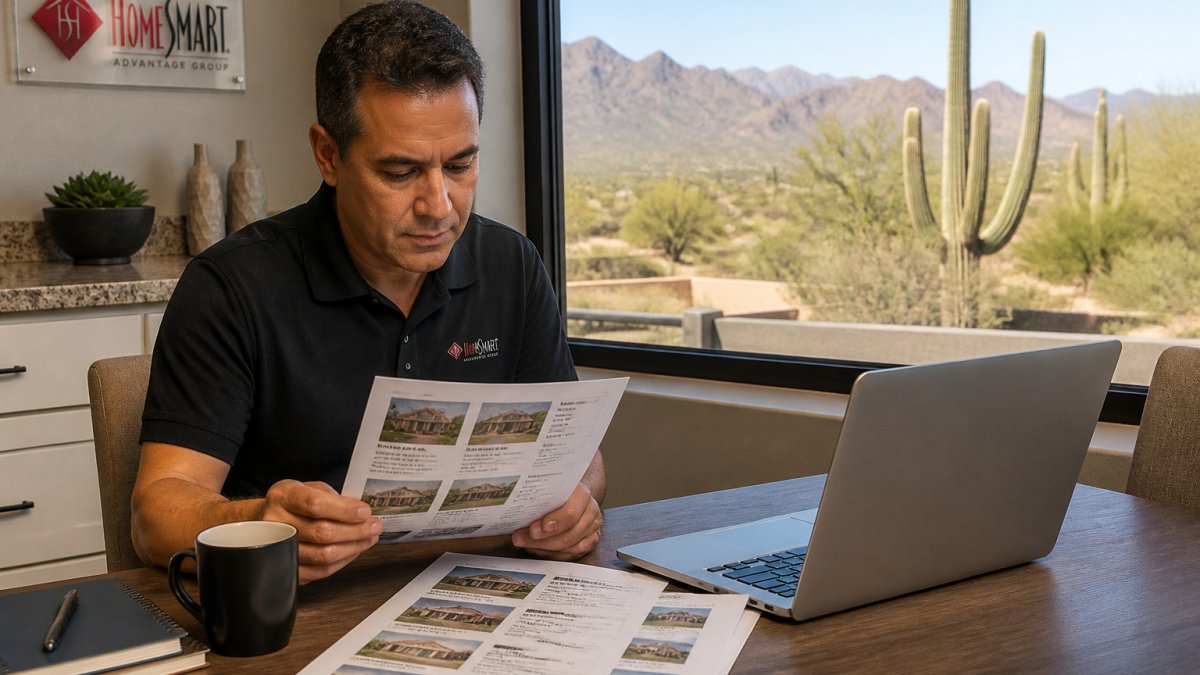
A comparable set can include:
- Sold comps, closed sales, ideally within the last three to six months, that establish what buyers actually paid.
- Pending comps, homes under contract that show where current demand is heading, even before the sale closes.
- Active comps, current competition your listing will be measured against by buyers shopping this week.
Sold, pending, and active listings provide different kinds of information for comparison.
How to Choose the Right Comparables
Choose sold comparables that are relevant to the home being valued.
Consider whether a comparable property is similar to the home being valued.
Factors to consider when comparing properties include:
- Property type, single-family, townhome, condo, or manufactured. Never mix them in one adjustment set.
- Square footage, stay within roughly 20% of your home's heated square footage when possible.
- Bedrooms and bathrooms, a 3/2 and a 4/3 rarely trade to the same buyer.
- Neighborhood or micro-location, same subdivision, or one with similar access, schools, and lot patterns.
- Age and lot size, a 1990s build on a quarter acre is not a comp for a 2020 build on a postage-stamp lot.
- Sale terms, flag cash sales, distressed sales, and deals with large seller concessions, since those prices may not reflect a standard retail sale.
A Repeatable Comp Selection Worksheet
A possible sequence is:
- Consider the home's location when selecting comparable properties.
- Compare properties using relevant characteristics.
- Review relevant details of comparable properties.
- Pending sales and active listings can provide additional context.
- Consider differences in terms and condition when reviewing comparables.
- Record why each comparable was included.
Tucson Micro-Location Factors That Change a Comp
Two homes with the same floor plan can price differently depending on where they sit. In Southern Arizona, watch for these value drivers when deciding whether a comp truly matches:
- Views and orientation, consider whether the properties have similar views and orientation.
- Lot size and usable yard, consider whether the properties have similar lot sizes and yard features.
- Age and construction, consider differences in age and construction when comparing properties.
- Community and HOA features, consider whether community features are similar.
- School attendance areas, consider whether the properties are in similar areas.
- Desert vs. landscaped, note differences in landscaping when comparing properties.
Consider differences between comparable properties when reviewing them.
The article lists the comparable property factors to check before choosing a comp.
| Factor | What to check | Why it matters |
|---|---|---|
| Property type | Single-family, townhome, condo, or manufactured | Never mix them in one adjustment set |
| Square footage | Within roughly 20% of your home | Keeps size differences small |
| Bedrooms and bathrooms | Match the layout | A 3/2 and a 4/3 rarely trade to the same buyer |
| Age and lot size | Similar build year and lot | Older homes on large lots differ from new ones |
| Sale terms | Flag cash, distressed, or heavy concession sales | These prices may not reflect a standard sale |
Step 2: Adjust Comparables for Condition, Size and Upgrades
Homes can differ in ways that are relevant to a valuation.
Factors to consider when comparing homes include:
- Square footage: Consider square footage when comparing properties.
- Condition: Consider differences in condition when comparing properties.
- Upgrades: Consider differences in upgrades when comparing properties.
- Lot size and views: Consider differences in lot size and views when comparing properties.
- Garage and parking: Consider differences in garage and parking features when comparing properties.
Consider the home's condition and features carefully.
Step 3: Check Online Home Value Estimates Against Local Data
Online estimates can be compared with other information about the property.
When reviewing an estimate, consider:
- Compare the estimate with other available information
- Consider whether the estimate reflects the property being valued
- Note differences between the estimate and other available information
- Review any differences before relying on an estimate
If an online estimate differs from other information, review the details used to generate it.
Step 4: Read Current Tucson Market Conditions and Price Reductions
Market conditions can vary by price band and neighborhood. Consider local information when evaluating a home's price.
Metrics that may be relevant include:
- Days on market, the time comparable homes take to go under contract.
- Sale-to-list ratio, a comparison of sale prices with list prices.
- Months of inventory, a measure relating current supply to the sales pace.
- Price reductions, changes to the asking prices of similar homes.
- Pending sales, information about homes under contract.
What Price Reductions Are Telling You
Price reductions on comparable listings may be one piece of information to consider when evaluating the market.
Read reductions this way:
- Many reductions in your segment, consider price reductions among comparable listings when evaluating your price.
- Few reductions and quick sales, consider these patterns alongside other relevant information.
- Reductions clustered just above your price band, consider these listings when reviewing comparable properties.
Set Your Price and Plan Adjustment Triggers
A supported range can be one consideration when choosing a list price.
Factors to consider after listing include:
- Showing volume, consider showing activity alongside other information about the listing.
- Two-to-three-week review, review the listing's activity after it has been on the market.
- Offer quality, consider offers and requested concessions when reviewing buyer feedback.
- Competing listings, consider similar listings when reviewing your position.
If you are worried about the appraisal coming in low once a buyer is under contract, 3 Tips To Combat A Low Appraisal explains practical steps to protect the deal.
Step 5: Use a Home Valuation Report Checklist
When reviewing a valuation report, consider whether it includes relevant information such as:
- Comparable sales with addresses, sale dates, and sale prices
- Adjustments explained line by line
- Property type matched to yours
- Recent sales within a reasonable time window
- Neighborhood and location factors noted
- Condition and upgrades considered
- A clear price range, not just one number
Step 6: Set Your Price and Plan Adjustment Triggers
Once you have a range, choose your list price. Price at or slightly above the middle of the supported range if the home is in strong condition and comparables support it. Price toward the lower end if the home needs work or the market is slowing.
Consider reviewing your price after listing in light of buyer interest.
If you are worried about the appraisal coming in low once a buyer is under contract, 3 Tips To Combat A Low Appraisal explains practical steps to protect the deal.
Your Next Step: Request a Pricing Review for Your Tucson Home
Pricing a home involves considering local information and the property's features.
Manny Maldonado, REALTOR® offers personalized guidance for Tucson homeowners, drawing on local experience and extensive property valuation knowledge. To talk through your home's price, request a pricing review for your Tucson home or call or text Manny at 520-449-2881. You can also visit mannysellstucsonrealestate.com for more information.
Frequently Asked Questions
How do I price my home accurately in Tucson?
Start with recent sales of similar homes in your Tucson neighborhood, usually within the last few months, and adjust for differences in size, condition, lot, and upgrades. Then compare those adjusted figures with current active listings and pending sales to see where buyer demand sits. Recent local data can provide context when considering market conditions. A comparative market analysis can be one source of information to consider before setting a list price.
Are online home value estimates accurate for Tucson homes?
Online estimates can be considered alongside other information about a property. Review the details and sources behind an estimate before relying on it.
What should I check in a home valuation report?
A valuation report may include comparable properties and information about the property being valued. Review the report's information and consider whether it is relevant to your home.
Should I price my Tucson home below market value?
Consider comparable sales and current market information when choosing a list price. Buyer responses and sale outcomes can vary.